Island capital · South-west Kefalonia
Argostoli
Αργοστόλι
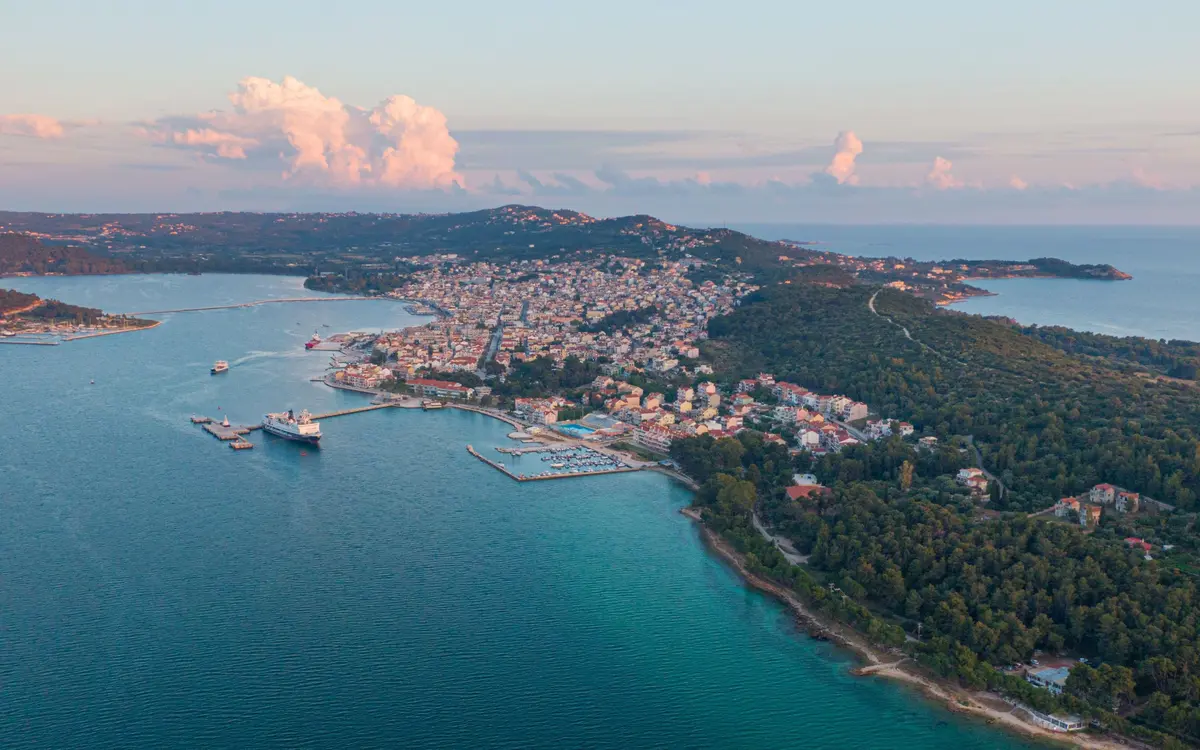
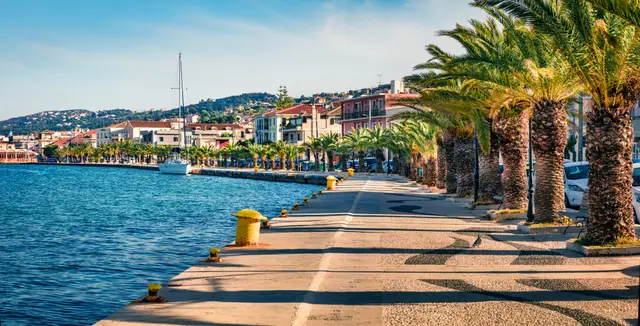
Kefalonia's capital sits on a peninsula between a sheltered bay and the open sea. It was rebuilt almost from scratch after 1953, and today it is a relaxed harbour town of squares, cafés and waterfront walks — with loggerhead turtles surfacing beside the quay.
At a glance
- Type
- Island capital and main port
- Population
- About 11,000 (2021)
- Capital since
- 1757
- Good for
- Walking, shopping, turtles, sunsets
- Ferries
- To Lixouri every 30–60 minutes
A capital by the sea
For centuries the capital of Kefalonia was not by the sea at all, but on a hill inland: the castle town of Agios Georgios, above today's village of Peratata. As trade grew, life moved down to the harbour, and in 1757 Argostoli officially became the island's capital and administrative centre. It still is, with a population of about 11,000 in the town itself.
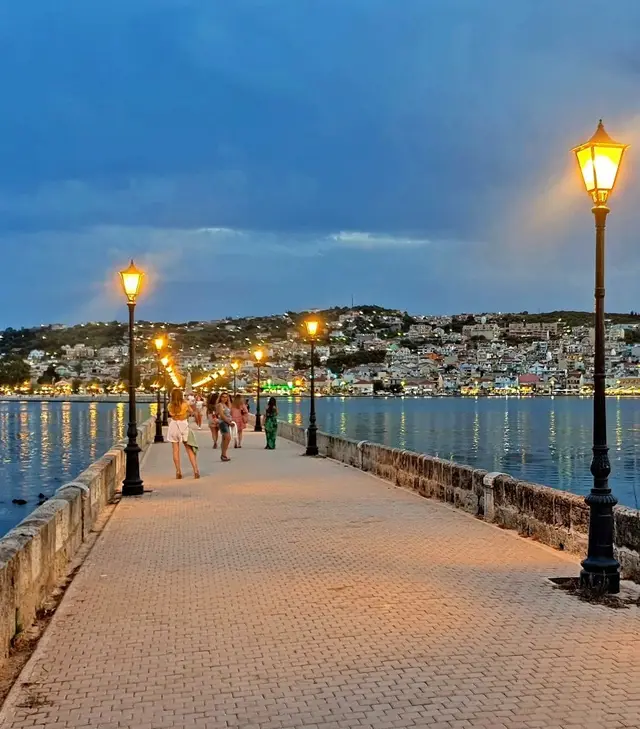
Argostoli grew under the Venetians and then the British, who ruled the Ionian Islands in the early 19th century and left a strong mark on the town. In 1813 a Swiss officer in British service, Colonel Charles Philippe de Bosset, built a wooden bridge across the shallow lagoon to shorten the road to the south of the island. It was soon given stone arches and later rebuilt entirely in stone, with an obelisk halfway across. The De Bosset Bridge carried traffic until 2005; today it is a walkway and one of the town's favourite spots for an evening stroll.
The 20th century was hard on Argostoli. German bombing damaged the town in 1943, and the earthquakes of August 1953 destroyed almost all of it. The rebuilt town is organised around a large central square and a long pedestrian street.
What to see and do
The harbour front and the turtles. Loggerhead turtles (Caretta caretta) live in Argostoli harbour all year, and you can often see them surfacing close to the quay or from the De Bosset bridge. Enjoy them from a distance: do not touch or feed them, and avoid flash photography. Food thrown into the water by people is bad for their health.
Lithostroto and the central square. The pedestrian street known as Lithostroto runs through the heart of town, lined with shops, cafés and the bell tower, which was rebuilt in 1985 to house its original clock. Along the street, a small museum honours the soldiers of the Italian Acqui Division, killed on Kefalonia in 1943. The central square is the place for an evening drink.
The De Bosset Bridge. Walk out over the lagoon at sunset for the view back to the town, as in the photo above.
The Katavothres. At the northern tip of the peninsula, near the Lassi road, the sea does something very rare: it flows into the land, disappearing into sinkholes known as the Katavothres. In 1835 an Englishman named Stevens used the current to drive a sea mill. In 1963 scientists poured green dye into the sinkholes and found it fourteen days later on the other side of the island, at Melissani Cave and Karavomylos near Sami. A water wheel still turns at the site today, and entry is free.
Agioi Theodoroi lighthouse. A little further along the coast road, the lighthouse first built by the British in 1829 — destroyed in 1953 and rebuilt to the original plans — is a classic place to watch the sun set over the sea.
When to visit
Argostoli is a living town, not a resort, so it is worth visiting all year. Summer evenings are busiest, with the whole town out on the squares and the waterfront. Spring and autumn are perfect for walking the peninsula.
Getting there and around
- From the airport: Kefalonia's airport is a short drive south of town.
- Ferry to Lixouri: A car ferry crosses the bay to Lixouri on the Paliki peninsula — about once an hour in winter and twice an hour in summer. It is the easiest way to reach Xi Beach.
- On foot: The centre, the harbour and the bridge are all within easy walking distance; the Katavothres and the lighthouse make a pleasant longer walk or a short drive.
- By boat: Day cruises in the bay and along the south coast leave from Argostoli harbour.
Good to know
- Shops in town usually close for a break in the afternoon and reopen in the evening.
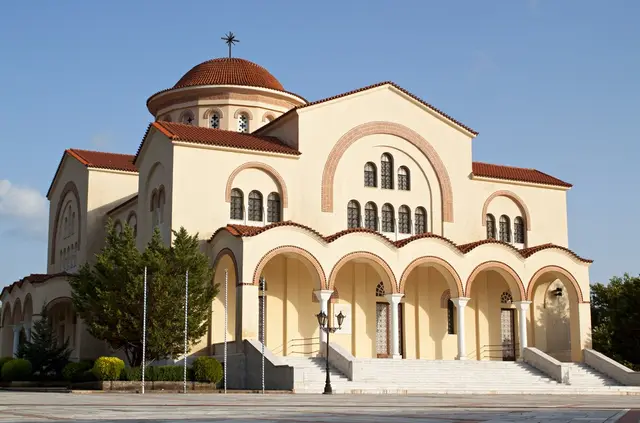
- Argostoli is a good base for the south of the island, and for the Omala valley and the Monastery of Agios Gerasimos.
Questions about Argostoli
When did Argostoli become the capital of Kefalonia?
In 1757, when the capital moved from the castle town of Agios Georgios to the harbour.
Where can you see turtles in Argostoli?
Loggerhead turtles live in the harbour all year and are often seen near the quay and from the De Bosset bridge. Please don't touch or feed them.
What are the Katavothres?
Sinkholes at the tip of the Argostoli peninsula where seawater flows into the land. The water crosses the island underground and appears about 14 days later near Sami.
How do you get from Argostoli to Lixouri?
By the car ferry across the bay, which runs about every 30 to 60 minutes depending on the season.
Excursions with KCG Tours
Tours from Argostoli
These tours start in Argostoli
 Bus Tours
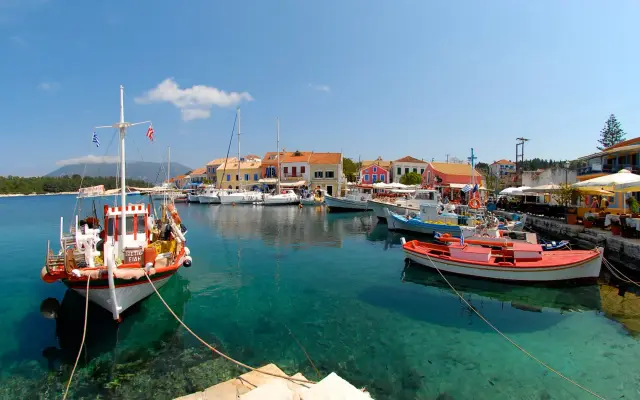
Fiscardo Island Tour
Departs: Express Market, Argostoli
8 HoursFrom €37.50/ person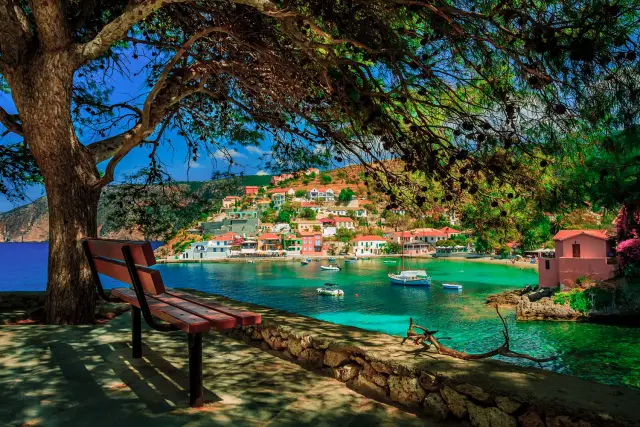 Bus Tours
Sunday Island Tour
Departs: Express Market, Argostoli
8 HoursFrom €37.50/ person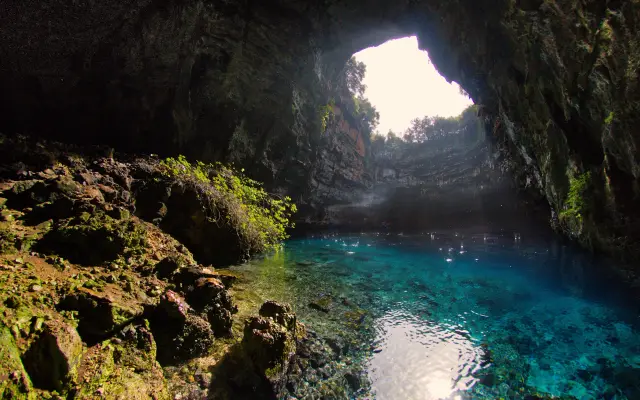 Bus Tours
Kefalonia Highlights
Departs: Express Market, Argostoli
8 HoursFrom €37.50/ person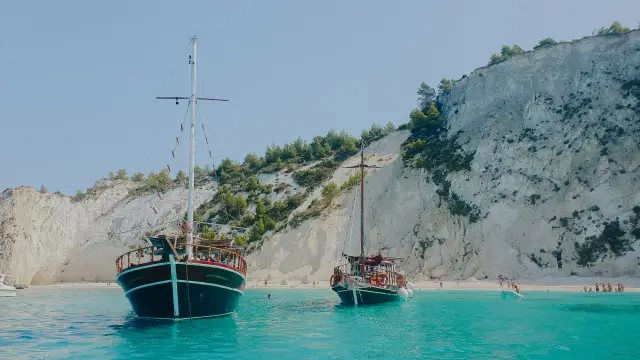 Argostoli Bay Cruises
Queen Bee I & II
Departs: Argostoli Harbour
Full Day / SunsetFrom €65/ person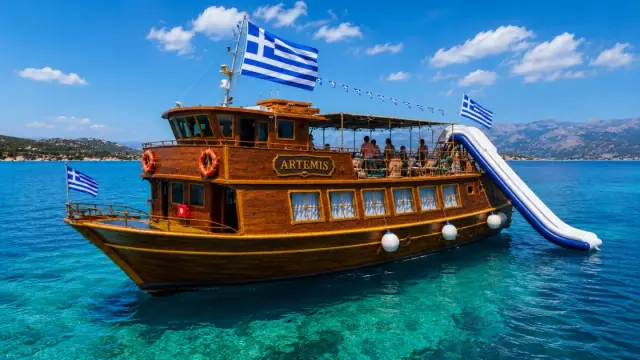 Argostoli Bay Cruises
Artemis Cruise
Departs: Argostoli Harbour
Full Day / SunsetFrom €65/ person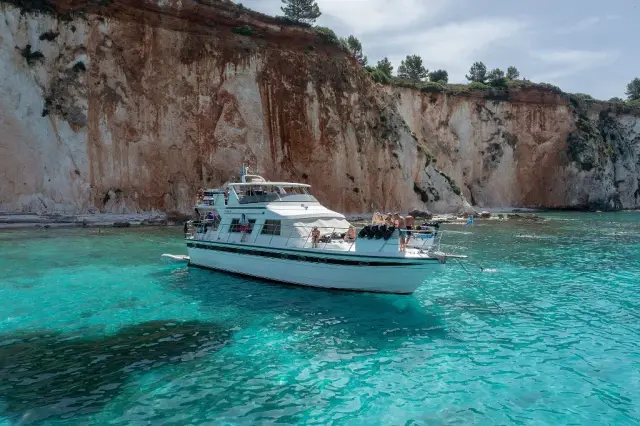 Argostoli Bay Cruises
Lady O BBQ Cruise
Departs: Argostoli Harbour
Full Day / SunsetFrom €65/ person
Show 6 moreShow fewer
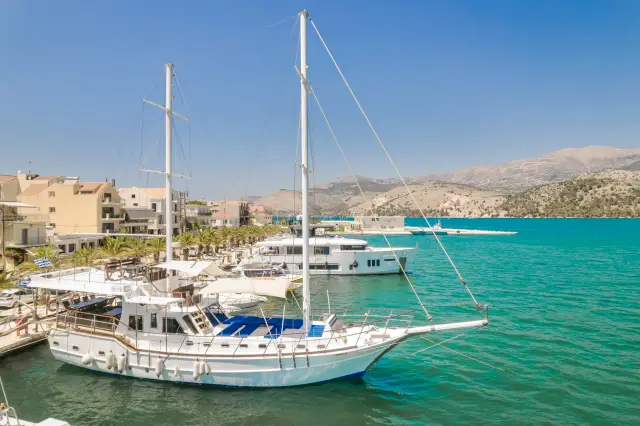 Argostoli Bay Cruises
Efplia Cruise
Departs: Argostoli Harbour
Full DayFrom €70/ person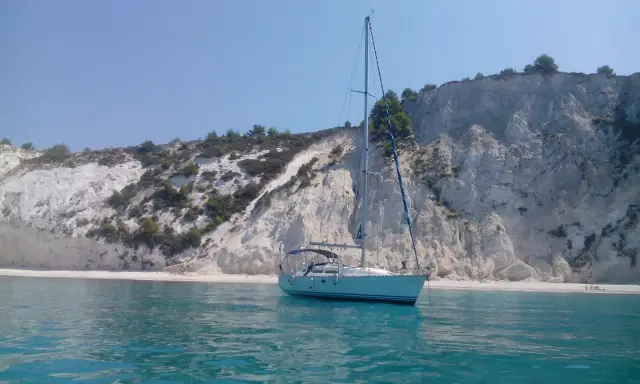 Sailing Cruises
Full-Day Sailing Cruise
Departs: Argostoli waterfront, across from Alpha Bank
8 HoursFrom €140/ person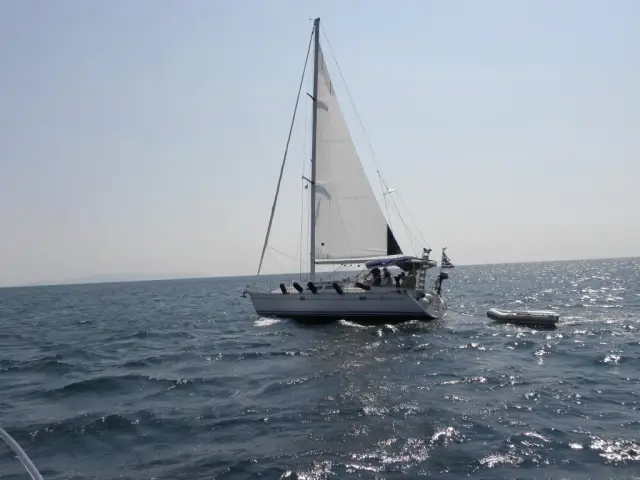 Sailing Cruises
Half-Day Sailing Cruise
Departs: Argostoli waterfront, across from Alpha Bank
4 HoursFrom €100/ person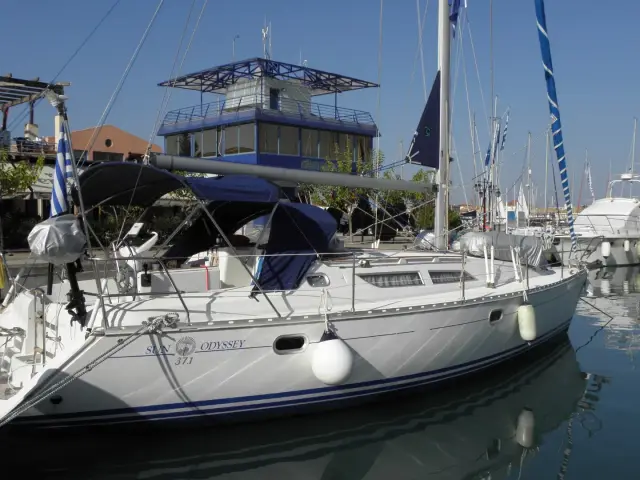 Sailing Cruises
Sunset Sailing Cruise
Departs: Argostoli waterfront, across from Alpha Bank
3 HoursFrom €100/ person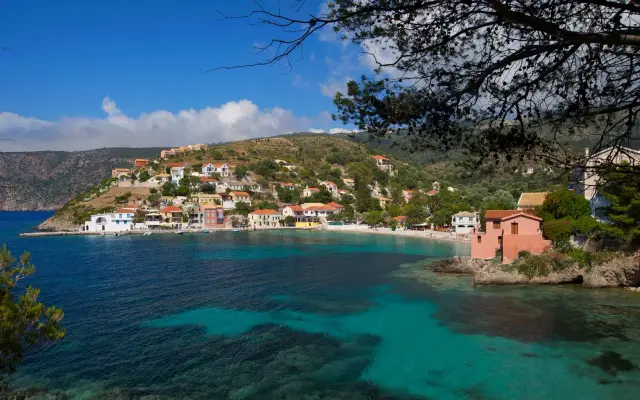 Shore Excursions
Assos & Fiscardo
Departs: Argostoli cruise port
5–6 HoursFrom €250/ groupBooked on request Shore Excursions
Kefalonia Mini Adventure
Departs: Argostoli cruise port
4.5–5 HoursFrom €250/ groupBooked on request
Prices are "from" prices; live availability and final prices are on each tour page. See all our tours