Village & Venetian castle · North-west Kefalonia
Assos
Άσος
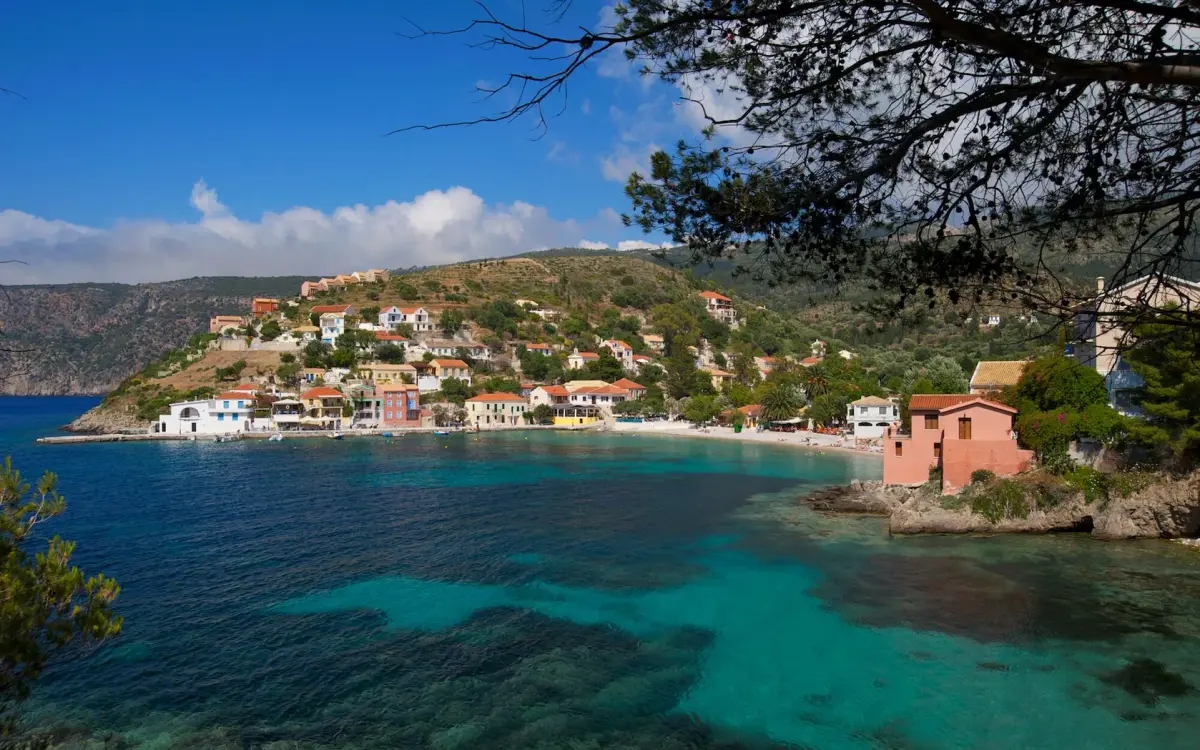
A handful of pastel houses on a strip of land barely 50 metres wide, a small harbour on either side and a whole peninsula crowned by a Venetian fortress: Assos is one of the most photographed places on Kefalonia, and one of the smallest.
At a glance
- Type
- Village and Venetian castle
- Area
- Erisos, north-west Kefalonia
- From Argostoli
- About 36 km
- Castle
- Built from 1593, free to visit
- Good for
- Photos, history, a quiet swim
A village on an isthmus
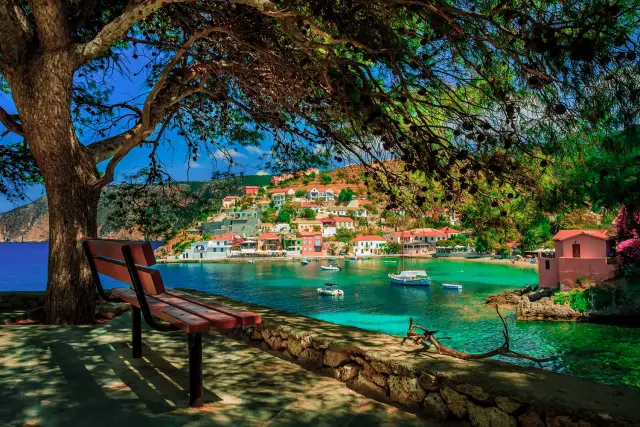
Assos sits on the west coast of the island, about 36 km north of Argostoli, where a narrow neck of land joins a high, rounded peninsula to the mainland. The village fills the isthmus and the slope above it; fewer than a hundred people live here all year. The bay to the north is the village harbour, used by fishing boats and visiting yachts.
Like almost everywhere on Kefalonia, Assos was destroyed by the earthquakes of August 1953. It was rebuilt with help from France — a debt still remembered in the name of the village's little square. The result is a village that looks traditional, with colourful houses and tiled roofs, but is largely post-war.
The Venetian castle
The peninsula above the village is enclosed by a Venetian fortress that covers almost all of it. In the late 16th century the old capital's fortress of Agios Georgios could not protect the whole island from Ottoman fleets and pirates, so Kefalonia's nobles asked the Venetian Senate for a second stronghold in the north. Work began in 1593, designed by the engineer Marino Gentilini; the main structure took about two years, and building inside the walls continued well into the 17th century.
The walls follow the edge of the peninsula for more than two kilometres and are reinforced by bastions. The main gate, on the eastern side, carries the date 1611 and a carving of the Lion of Saint Mark, the emblem of Venice. In 1685 the Venetian cartographer Vincenzo Coronelli counted 60 public buildings and about 200 houses inside the walls. Assos remained the seat of the Venetian governor of the area until the fall of Venice in 1797, but the planned town never really took off: the castle was too far from everything else.
The castle had a quieter second life in the 20th century. From 1927 until the 1953 earthquake it housed the county prison, with a prison farm in its southern part. The last residents left in 1963, and since then the peninsula has belonged to pine trees, olive groves and goats.
What to see and do
Walk up to the castle. A stone-paved path climbs from the village to the main gate. It is steady uphill rather than difficult, with wide views over the bay on the way. Inside the walls you can see the remains of the governor's residence, the small Catholic church of Saint Mark near the gate and the buildings of the old prison farm. Entry is free.
Swim in the bay. There are two small pebble beaches by the village with calm, clear water. The larger one usually has sunbeds and umbrellas for rent; the smaller one has no facilities.
Sit by the water. A few tavernas and cafés on the harbour serve fresh fish and local dishes. Assos is at its best in the late afternoon and at sunset, when the day visitors have gone and the light turns the houses gold.
See it from above. The classic photograph of Assos — the village, the isthmus and the castle peninsula in one frame — is taken from the main road above the village. Stop only at a safe lay-by.
When to visit
Assos is lovely all year, but the castle walk is much more pleasant in spring and autumn than in the heat of a July afternoon. In high summer, come early in the morning or late in the day; parking in the village is very limited.
Getting there
- By road: Assos is about 36 km from Argostoli and 25 km from Sami. The road down to the village from the main north–south road is narrow and steep, with hairpin bends; in summer it is often easier to park higher up and walk the last stretch.
- On an excursion: Assos is a regular stop on island tours of north Kefalonia, usually combined with Myrtos and Fiscardo, and private boats sometimes call into the bay.
Good to know
- Take water and a hat for the castle walk — there is little shade on the way up and no shop inside the walls.
- Wear sturdy shoes: the path is paved but uneven in places.
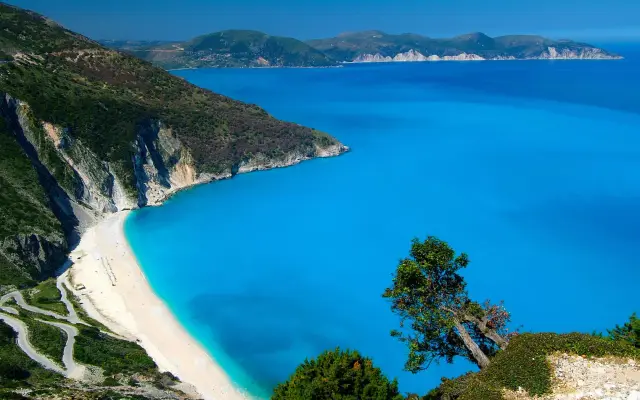
- Myrtos Beach is only a short drive south, and the two are easy to combine in one trip.
Questions about Assos
How long does it take to walk up to Assos castle?
It is a steady uphill walk on a paved path from the village to the main gate. Allow time to rest and enjoy the views, and more if you want to explore inside the walls.
Is Assos castle free?
Yes, entry to the castle grounds is free.
Can you swim in Assos?
Yes. There are two small pebble beaches in the village with calm, clear water.
Who built Assos castle?
The Republic of Venice, from 1593, to protect north Kefalonia from Ottoman and pirate raids.
Excursions with KCG Tours
Visit Assos with us
 Bus Tours
Fiscardo Island Tour
Stop: Assos Village
8 HoursFrom €37.50/ person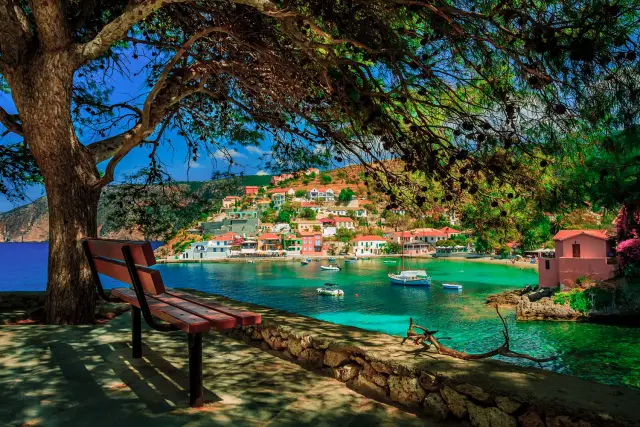 Bus Tours
Sunday Island Tour
Stop: Assos Village
8 HoursFrom €37.50/ person Bus Tours
Kefalonian Adventure
Stop: Assos Village
8 HoursFrom €37.50/ person Bus Tours
Kefalonia Highlights
Stop: Assos Village
8 HoursFrom €37.50/ person
 DeutschDeutschsprachige Touren
Kefalonia Entdecken
Stop: Assos Dorf
8 StundenFrom €57.50/ person Cruises from Sami
Full Round of Kefalonia Cruise
Stop: Assos – Swim & Explore
9 HoursFrom €1200/ boat (up to 9 guests)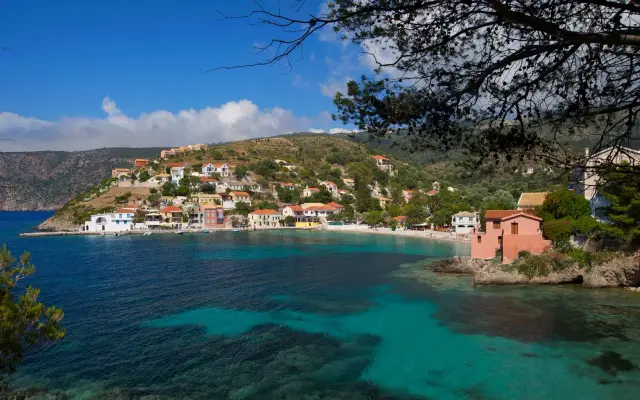 Shore Excursions
Assos & Fiscardo
Stop: Assos Village
5–6 HoursFrom €250/ groupBooked on request
Prices are "from" prices; live availability and final prices are on each tour page. See all our tours